Five steps, in order
Five steps, one building
Synthesis, purification, lyophilisation, fill and finish, release testing. Every one of them runs here, and every one of them is written down.
A process is what a record is kept of.
05Steps, each with its record

Station 01SynthesisScroll indexes the track
The five steps
Five controlled steps between a sequence and a sealed vial.
- 01
Synthesis
Sequences are assembled by solid-phase peptide synthesis, residue by residue.
- What enters
- A protected amino acid sequence and the resin it is built on.
- What happens
- Residues are coupled one at a time on the resin, then the finished chain is cleaved from it.
- What is checked
- Each coupling is checked before the next residue is added.
- What leaves
- Crude peptide in solution, with its sequence recorded.
Why it mattersThe sequence is assembled in this building. It is not bought in and relabelled.
- 02
Purification
Crude peptide is purified by preparative HPLC. Fractions are pooled against the purity specification.
- What enters
- Crude peptide from synthesis.
- What happens
- The crude is separated by preparative HPLC and the target fractions are pooled.
- What is checked
- Fractions are pooled against the purity specification, not by eye.
- What leaves
- Purified peptide in solution, ready for drying.
Why it mattersPurity is made at this step. Release testing confirms it later; it does not create it.
- 03
Lyophilisation
The purified solution is freeze-dried into a stable cake.
- What enters
- The purified solution, dispensed into its trays.
- What happens
- It is frozen and dried under vacuum into a stable cake.
- What is checked
- The cake is inspected through the glass before it moves on.
- What leaves
- A dry cake, stable at the condition printed on the label.
Why it mattersA lyophilised cake is what lets a peptide be shipped and stored as a solid.
- 04
Fill and finish
Vials are filled by mass, stoppered and crimp-sealed with an aluminium cap.
- What enters
- Lyophilised material, tubular glass vials, stoppers and aluminium caps.
- What happens
- Each vial is filled by mass, stoppered and crimp-sealed in a controlled area.
- What is checked
- The fill mass, and the seal after crimping.
- What leaves
- A sealed vial with its lot number printed on the label.
Why it mattersThis is the one step the vial is open, and it happens in a classified environment.
- 05
Release testing
Each lot is tested for HPLC purity and pH, then released with its certificate.
- What enters
- Sealed vials from the lot.
- What happens
- The lot is tested for purity by HPLC and for pH, and the results are compared with the specification.
- What is checked
- Both results, against the written specification. A lot that does not meet it is not released.
- What leaves
- A released lot with its certificate of analysis, or a held lot.
Why it mattersRelease is decided once per lot, against a specification and never against the previous lot.
Schematic. No lot values are shown. No temperature, pressure, cycle time, column dimension, batch size or yield appears on this page.
The five process steps and their station detail, as worded
Each step has a control and a record
Nothing moves to the next step on judgement alone. Each transfer is checked and written down.
The batch record carries every check for the lot it belongs to.
The five in-process control lines, as worded
- 05Control points
- 01Batch record per lot
- 02Release tests


The vial is open for one step, in a classified environment
Filling, stoppering and sealing happen in a controlled area. Components enter through a pass-through, not through the door.
Pass-through hatchBoth doors never open at onceScroll runs the interlock

Classification of the filling environment
ISO 14644-1 class
The class of the filling environment is stated once it is confirmed. An empty field is worth more than an invented one, so the slot is left empty.
The class of the filling environment, and the empty slot that stands for it
The plant behind the catalogue
The laboratory runs the equipment each step needs. Nothing in the five steps is subcontracted.
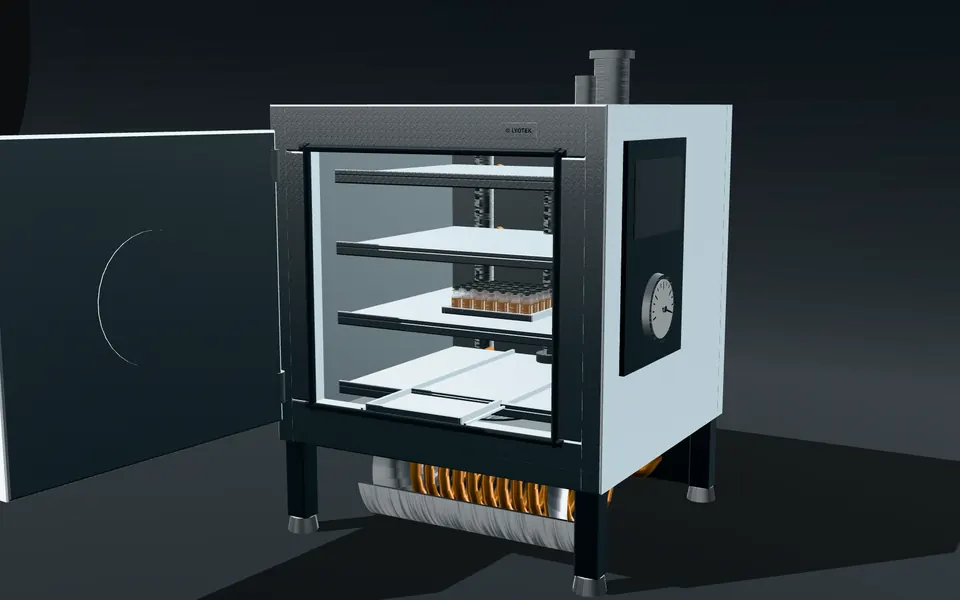
Step 03
Lyophiliser
Shelves and condenser. Freeze-dries the purified solution into a cake.
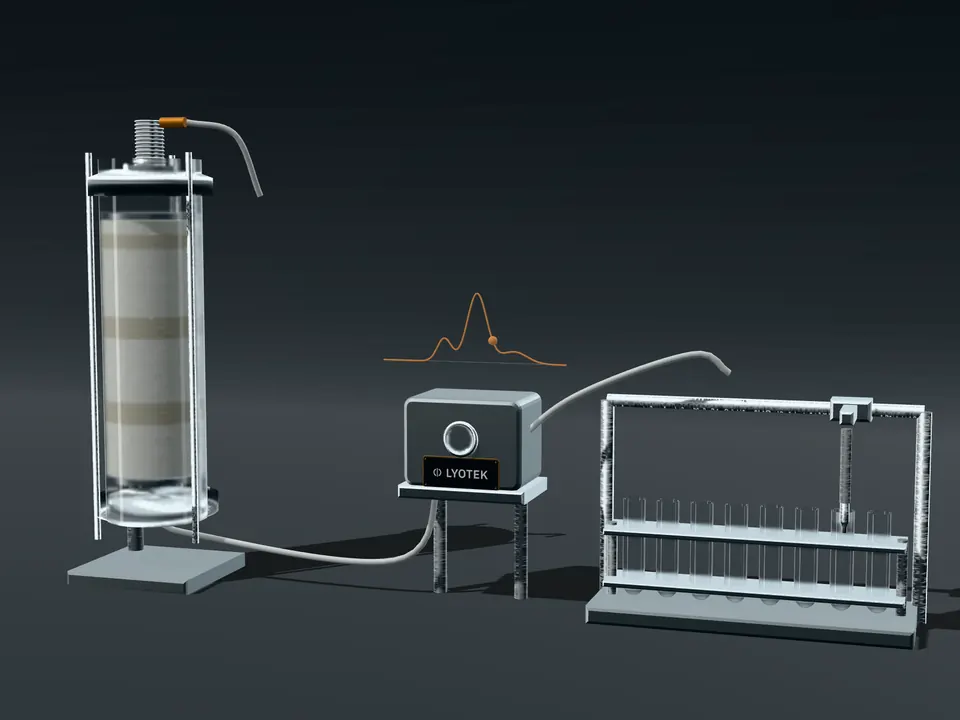
Step 02
Preparative column and detector
Separates the target from the crude mixture. Fractions are collected downstream of the detector.
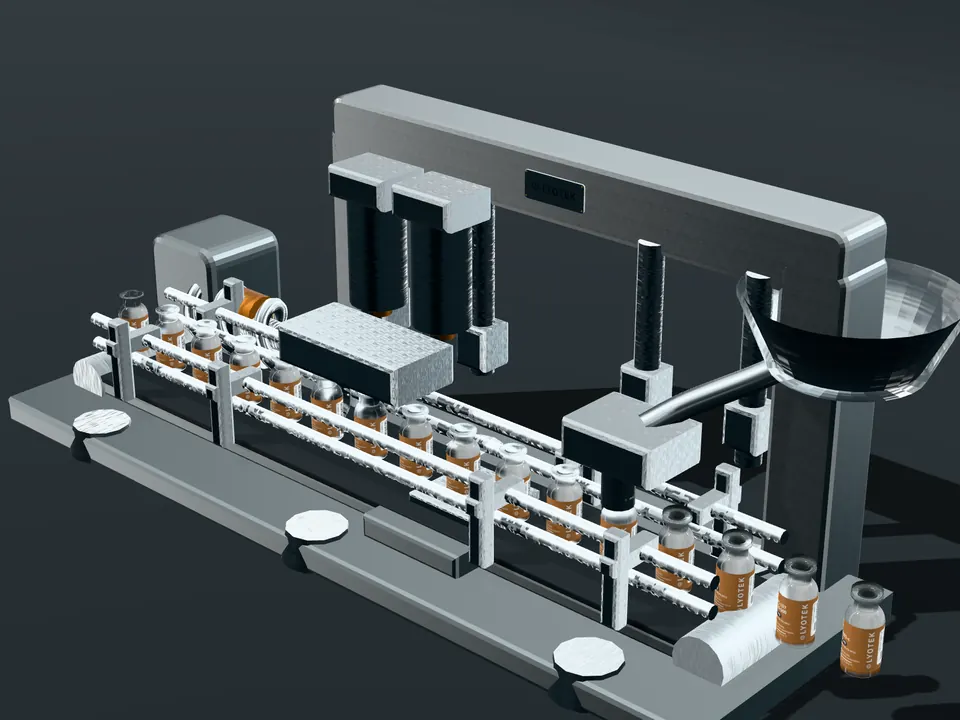
Step 04
Filling and stoppering line
Fills by mass and seats the stopper. The track indexes one station at a time.
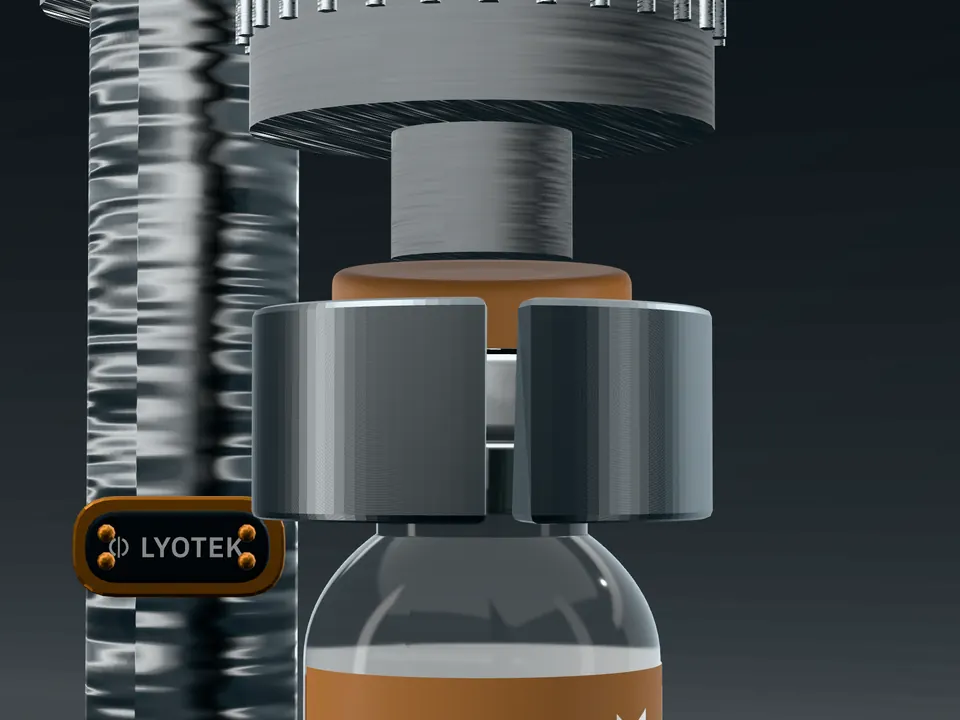
Step 04
Crimping head
Closes the aluminium cap over the stopper. The jaws roll the skirt and never touch the glass.
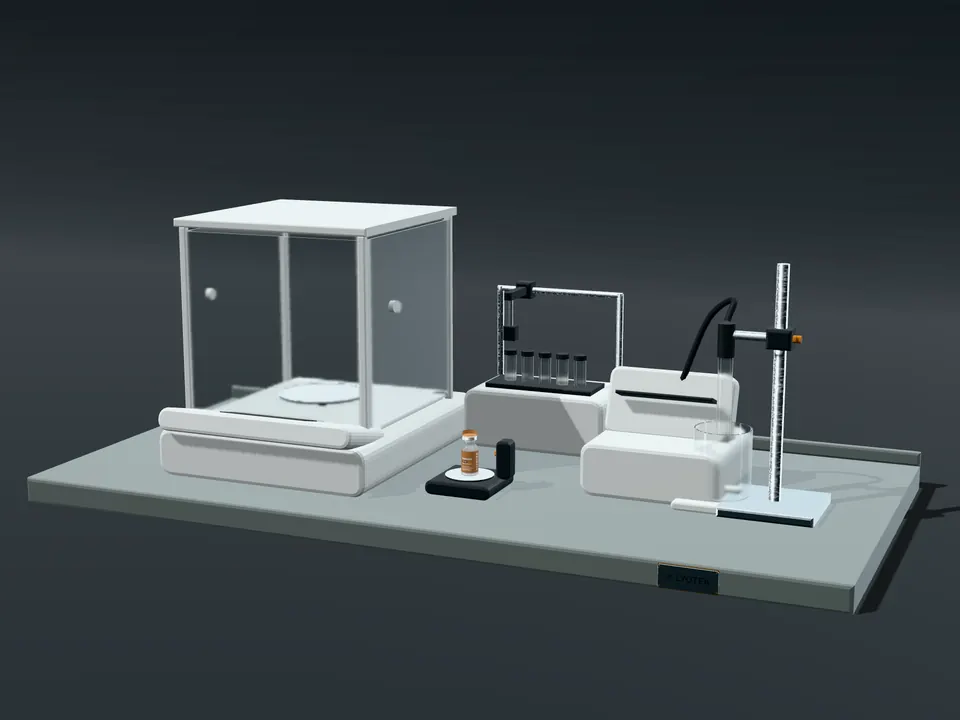
Step 05
Analytical bench
Balance and pH meter for release testing. Both displays are blank on purpose.
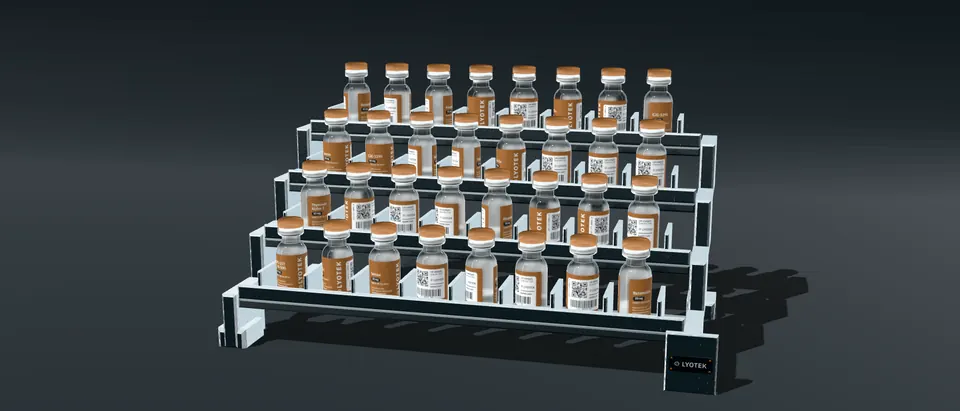
After release
Retention rack
Holds a retained sample from every lot, each with its own lot field.


Swipe through the stations
No brand, model, capacity or serial is named. The step index ties each machine back to the process spine.
The equipment list as a list of what the laboratory owns, and the retention rack with any retained-sample policy
- 06Stations
- 05Process steps covered
- 00Steps subcontracted
What the process produces
A sealed vial with a lot number, a batch record that carries every check taken on the way to it, and a certificate of analysis issued against the specification. Nothing is released before those three exist.
Enquiries
Documentation and distribution enquiries reach the laboratory directly. This site publishes no prices and takes no orders.